
We Started with Port-to-Port. Then Came the Collection Address.
How we built a configurable freight quoting workflow, starting with the sea rate and adding the fields and prices needed around it.
We Started with Port-to-Port. Then Came the Collection Address.
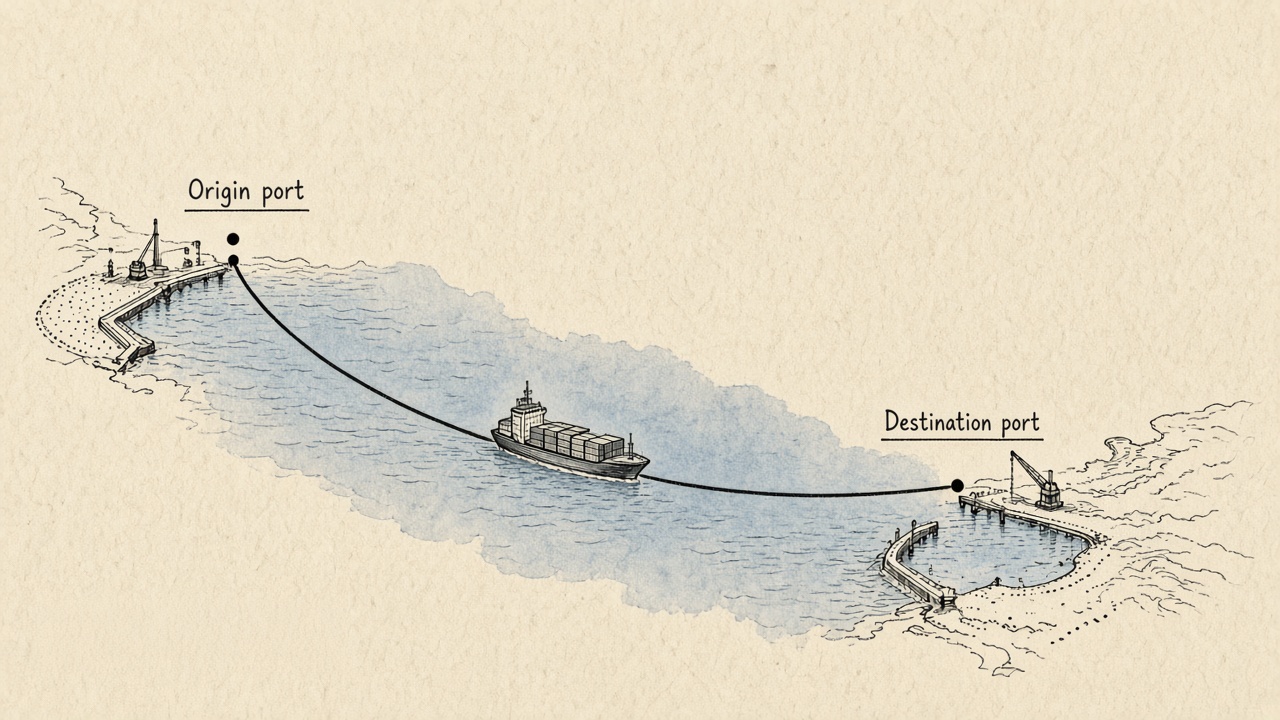
We built the first version of our quoting workflow at FreightBy.ai around port-to-port ocean freight. We started with a request like this:
Please quote two 40HC containers from Shanghai to Valencia.
We made the ports, container quantity and type, cargo description, weight, dangerous-goods status and cargo-ready date required for this example. The system collected what was already in the email and asked about anything missing. Once those details were complete, we had the information to request a carrier's rate.
That gave us one pricing component, Freight. We configured the provider from whom to request it and the detail we wanted back: a single figure or a breakdown. The returned rate became the basis of the quotation for that sea leg.

We kept the information collected from the customer in the quoting module's field model. Pricing had its own configuration for the components and rate requests. Those two configurations gave us a way to build on the first version as the service expanded.
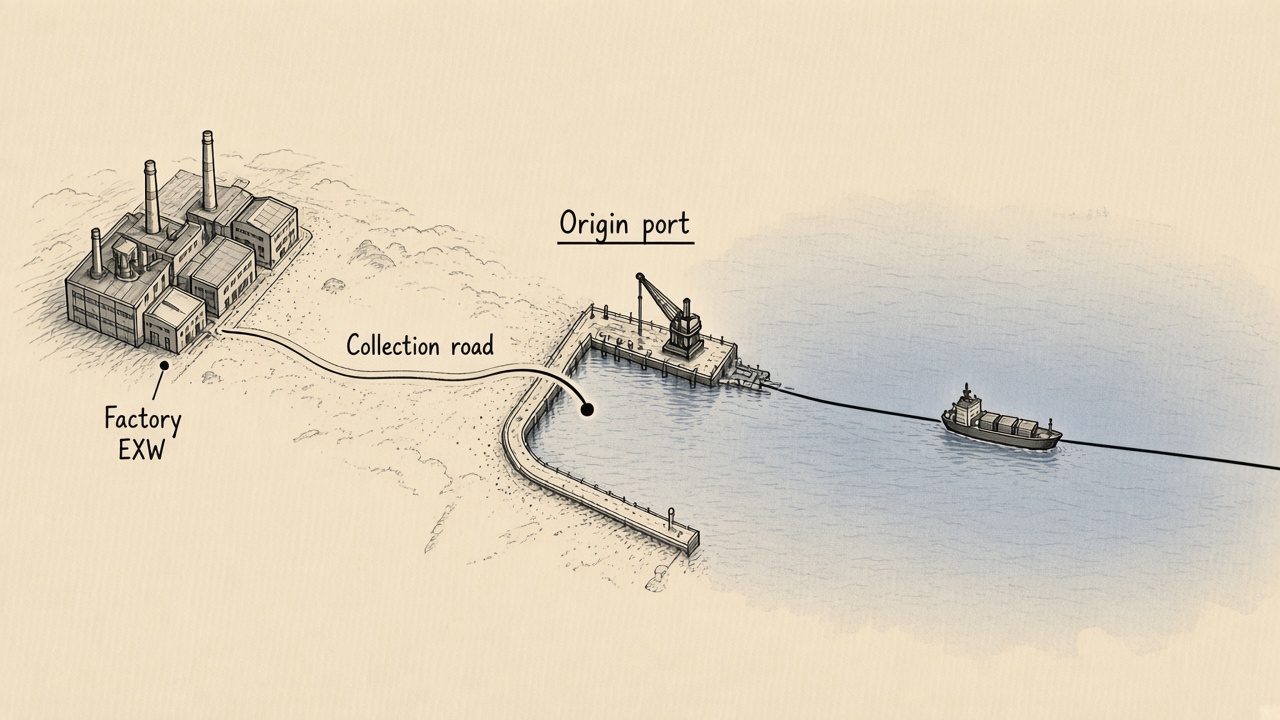
We then added collection. With the same shipment, the request could include another sentence:
The goods are EXW at the supplier's factory. Please include collection.
The two ports were already known. What we needed next was the factory's exact address. We added that field and made it required when collection was part of the requested service. We also collected the loading and export arrangements needed to get the origin work priced.
Under EXW, Ex Works, the seller makes the goods available at the agreed place. Loading, onward transport and applicable export formalities are the buyer's responsibility. A buyer asking a forwarder to handle that work gives the forwarder more to arrange than the sea leg alone.
This was where the field conditions became useful. Through the interface, we configured a condition called visible if to determine when a field applied, and a separate required attribute to make it mandatory. The collection address applied to door-to-port and door-to-door requests. A customer asking us for port-to-port alone was asked for the information needed for that service.
We added Collection as a pricing component alongside Freight, with its own provider and requested cost breakdown. The address collected from the customer supplied the starting point for that request. The collection price and the sea rate then belonged to the same quotation.
We used Incoterms as context for this work. They allocate obligations, costs and risk between the seller and buyer; the forwarder still needs to agree which services its customer has assigned to it. We kept the trade term and the requested transport scope separate in the model. ICC explains how the sale and transport contracts relate.
A request under FCA, Free Carrier, brought us to the handover point. The seller handles export clearance and, at its own premises, loads the collecting vehicle. At another agreed place, it delivers to the nominated carrier or person, ready for unloading. ICC's FCA rules.
For that request, we made the precise handover point required. Were we collecting at the factory or receiving the goods at a terminal? That answer established where our part of the transport began and whether collection belonged in the price. We kept the shipment details already collected and asked for the missing location.
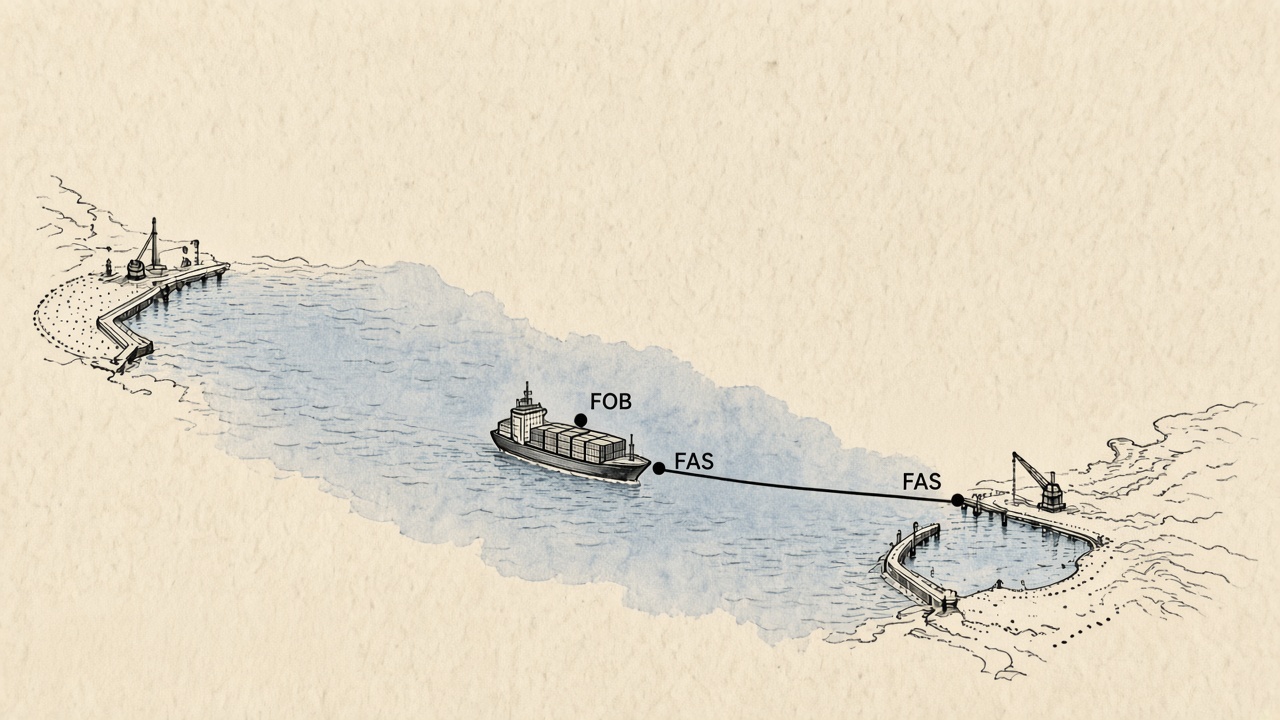
At the port, FAS, Free Alongside Ship, places delivery alongside the nominated vessel. FOB, Free On Board, places it on board. Under both maritime rules, the seller handles export clearance and the buyer normally arranges the main carriage. For work assigned from that handover, we required a clear shipment port and handover point, and checked which origin services had already been arranged. ICC's FAS and FOB rules.
For our container example, we also needed to establish the actual handover. If it happened at a terminal before vessel loading, FCA was generally the rule to consider. Vessel and loading-window details could follow when known. They were useful to the work without being mandatory for every initial rate request. ICC Academy on FCA and FOB.
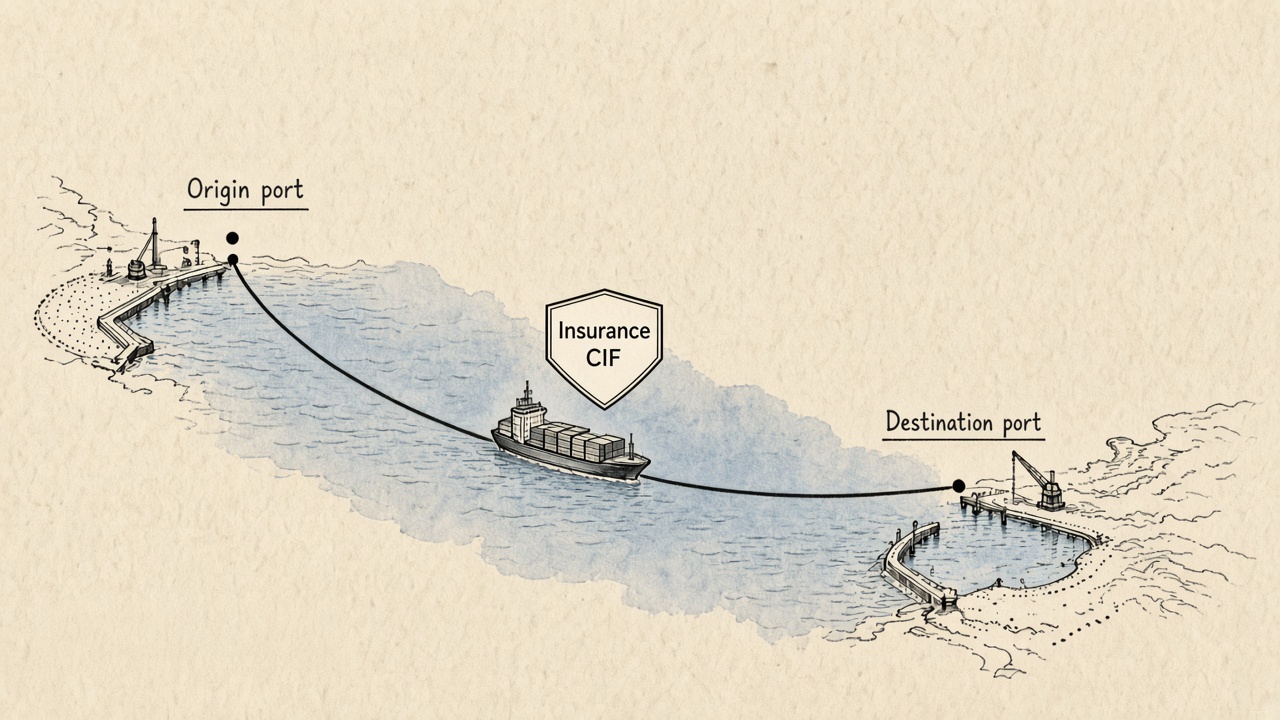
When the seller arranged and paid for the sea freight, CFR, Cost and Freight, brought the named destination port into the agreement. That port was already in our base model. We also confirmed the carriage scope and the charges included in the freight arrangement. Under CFR, the seller pays carriage to destination, while risk passes when the goods are delivered on board at origin. ICC Academy on CFR and CIF.
CIF, Cost, Insurance and Freight, added the seller's obligation to obtain insurance, with the same origin risk-transfer point. When arranging that insurance was part of our assignment, we added an Insurance component. We made the cargo value, currency and requested cover required for that rate request. A missing cargo value therefore led to a specific question before we asked the provider for a price. ICC Academy on CIF.
The destination could also extend beyond a port. CPT, Carriage Paid To, and CIP, Carriage and Insurance Paid To, apply to any transport mode or combination of modes. The seller pays carriage to the named destination, while risk passes at the agreed handover to the carrier. CIP also requires insurance. ICC Academy on CPT and CIP.
For those requests, we required the exact destination point and confirmation of the transport legs assigned to us. An inland destination gave us another delivery service to price. When the assignment included insurance under CIP, we reused the insurance fields we had already added.
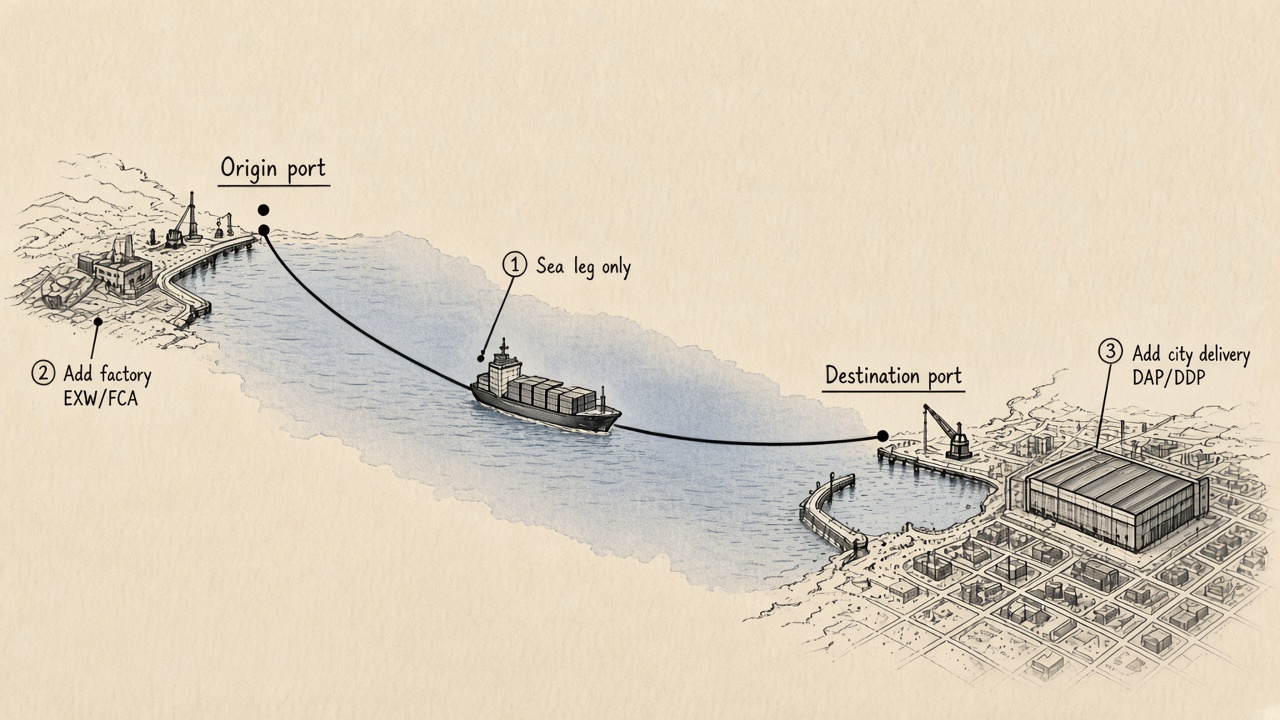
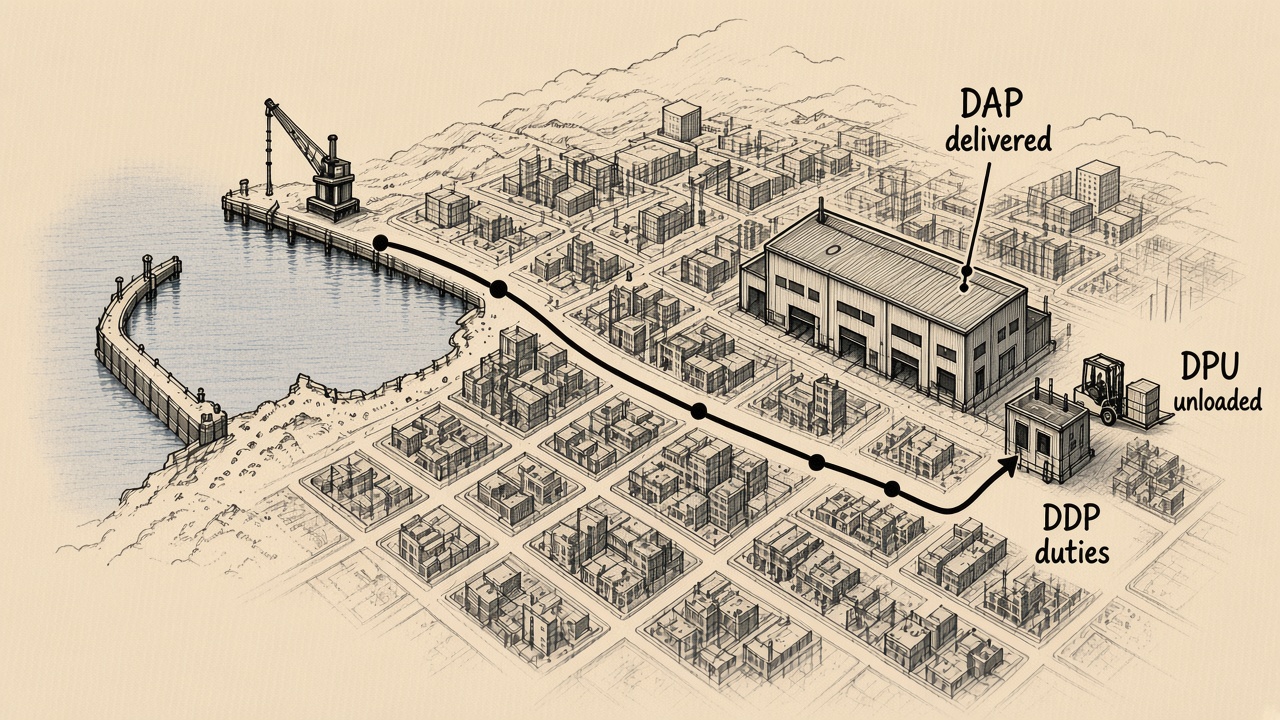
Following the shipment beyond Valencia's port brought us to the recipient's address. Under DAP, Delivered at Place, the seller delivers at the named destination, ready for unloading, while the buyer handles import clearance. We made the delivery address required for port-to-door and door-to-door requests. We also collected the delivery window and access details needed by the provider, and added Delivery as a pricing component.
With DPU, Delivered at Place Unloaded, the seller also unloads at destination; import clearance stays with the buyer. If that unloading was assigned to us, we required its agreed scope and method. We asked whether equipment was available at the site or needed to be provided. The answer supplied the information to get that work priced.
DDP, Delivered Duty Paid, added the seller's responsibility for import clearance and applicable import duties and taxes, with delivery ready for unloading. For that work, we required importer details and customs information, including classification, origin and customs value, together with confirmation of the applicable duty and tax treatment. We used those inputs to request the relevant prices from a provider able to perform the work. Under DAP, DPU and DDP, risk runs to the respective destination delivery point.
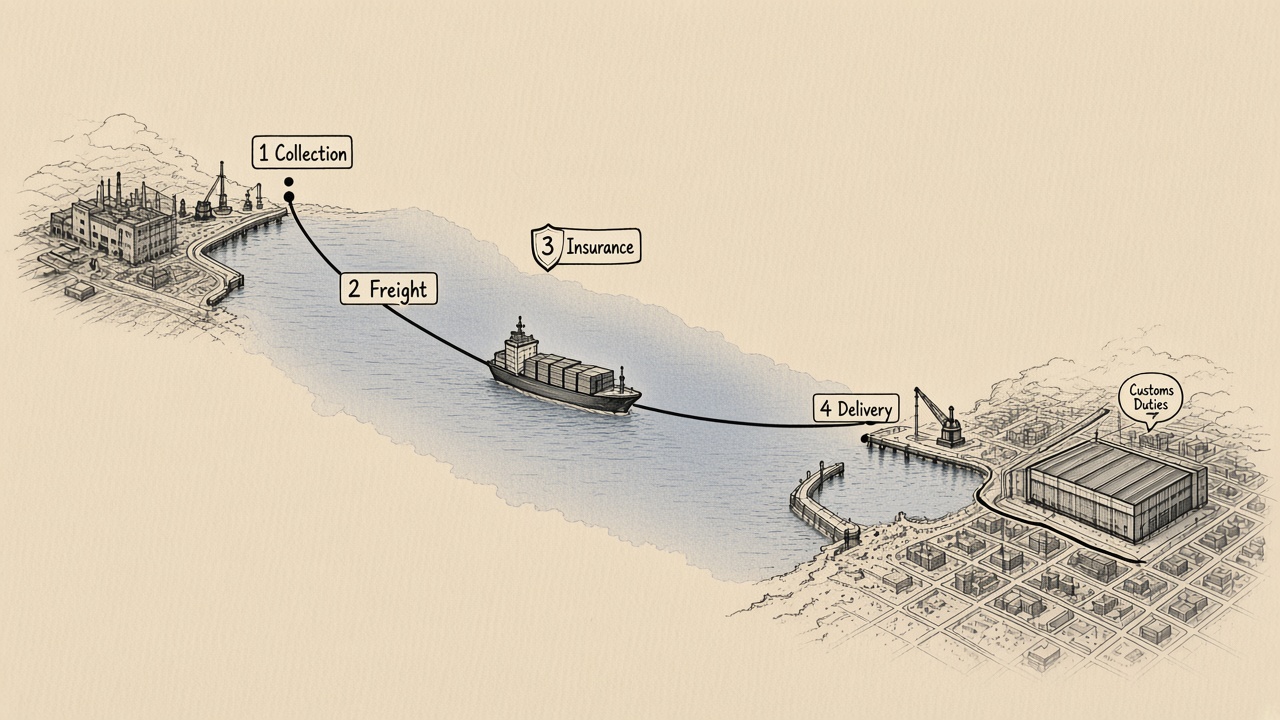
By then, the quotation involved more than the two ports we started with. We had added the fields needed for each assigned service and configured the corresponding price requests. The same address or insurance details could be reused where they applied. The customer supplied the missing information, the providers supplied the prices, and those components were assembled into an offer for the agreed work.
Want to see how we built this? Book a demo — thirty minutes with a founder, on the live product.